
REVIEW: "Psychic Tarot"
A 2011 Tarot guidebook goes audio.

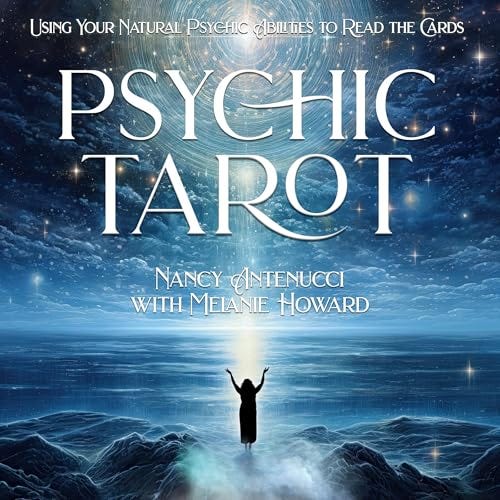
Psychic Tarot: Using Your Natural Psychic Abilities to Read the Cards
by Nancy Antenucci with Melanie Howard
Audiobook edition (narration by Charity Orrison)
Lewellyn Publications, 2025
My entire path as a psychic reader started with the absence of the LWB [Little White Book] with my first tarot deck. Some guy in an assembly line birthed a powerful seer the day they goofed up. It never dawned on me that each had a specific definition. I just took it into my own hands and asked each card what they were all about.
For years I have told students to put these little buggers out of sight until they have gotten to know the deck first. My goal as a teacher is to surface my student’s creative authority. They need to know what they actually see, feel, and sense before relying on another’s filter.
— Nancy Antenucci quoted in “7 Questions with…Nancy Antenucci” on Tarot By Hilary
Amen!
As user-friendly intros to Tarot go, Mary K. Greer’s classic Tarot for Your Self always gets my nod, but Psychic Tarot, the 2011 guidebook authored by Nancy Antenucci with her student Melanie Howard is right up there, too. And with an audiobook edition just out last month, Antenucci’s guidance shines even brighter now.
First, let’s get a few things out of the way.
When seeking the right Tarot guidebooks for you, it’s best to note—and honor—your own interests, needs, and learning style. Antenucci’s book does not offer a detailed, scholarly lecture on the history of the cards. It does not adhere to a codified tradition of interpretation or ceremony. Psychic Tarot does not list a strict roster of correspondences (specific card meanings) you must commit to memory before you can dare to pull off a reading. And it refuses to entertain and center cultural or gender-based hierarchies.
If being set up for initial—and already quite heady—dates with Tarot in which you and the cards vibe one another seems way off the mark, this is not your book. Look elsewhere. As for me, Antenucci vividly reflects and values the wild, personal adventure I’ve experienced with Tarot for decades.
She encourages your own authority, voice, and style as you work with this “beautiful map of choices.” She calls it “liberated creativity” and affirms it can “change the world for the better.” That might sound like a tall order, but I agree.
The audiobook benefits from her imagination, warmth, and breezy wit in storytelling—a useful skill for any Tarot reader to possess—and it is narrated with mellifluous charm by Charity Orrison. That’s especially evident in Antenucci’s exploration of the Major Arcana which becomes an elaborate, episodic, nearly cinematic journey with you as protagonist. For each encounter with a Major Arcana card, she poses a question that will entice you into deeper work.
[Note: I recommend keeping Orrison’s pace at 1x to get the full effect, then perhaps set it to anywhere from 3x to even 5x if you’re listening a second time or more to review a section.]
So, now, what of that label “psychic” which, as both Rachel Pollack and Antenucci came to discover, spooks so many Tarot readers?
Well, if you view psychic (or intuitive) ability and spiritwork as inherent to your humanity, as Antenucci and I both do, there’s every reason to embrace it in Tarot practice. In fact, working with Tarot imagery in a sensitive, interactive, liberatory way will nudge your subtler senses forward and give them good, strengthening exercise, expanding and deepening the ways Tarot can assist you and your querents.
Conversations between reader and cards do a superior job of instilling living knowledge and confidence. In fact, if most readers are honest, they’ll recognize that it’s in the committed doing—not necessarily the thumbing through numerous books, sitting in expensive workshops, or scrolling YouTube videos—that they’ve absorbed, unfolded, and sustained the most. That intimate learning never ends, because we are fascinating, complex beings who never stay static and neither does Tarot.
Thinking in Tarot, for Antenucci, means welcoming information that may arrive in a variety of ways, from the visual to the visceral, and not throwing up barriers to your perception. It means sometimes blurring the hard distinctions between positive and negative, good and bad, and appreciating the prismatic shades of meaning offered by cards pulled out of the deck reversed. It’s also about respecting the way imagery and story stimulate the subconscious mind, so we do not force the message of a reading to reveal all its mysteries before the recipient is ready to grasp and integrate them.
Speaking of being ready, ask yourself: Are you ready to grasp the freedom Antenucci demonstrates in Psychic Tarot? If you are, I think you’ll enjoy this exciting audiobook.
Order Psychic Tarot on Audible.
This sounds fascinating and really helpful. I hope it comes to Libro.fm!